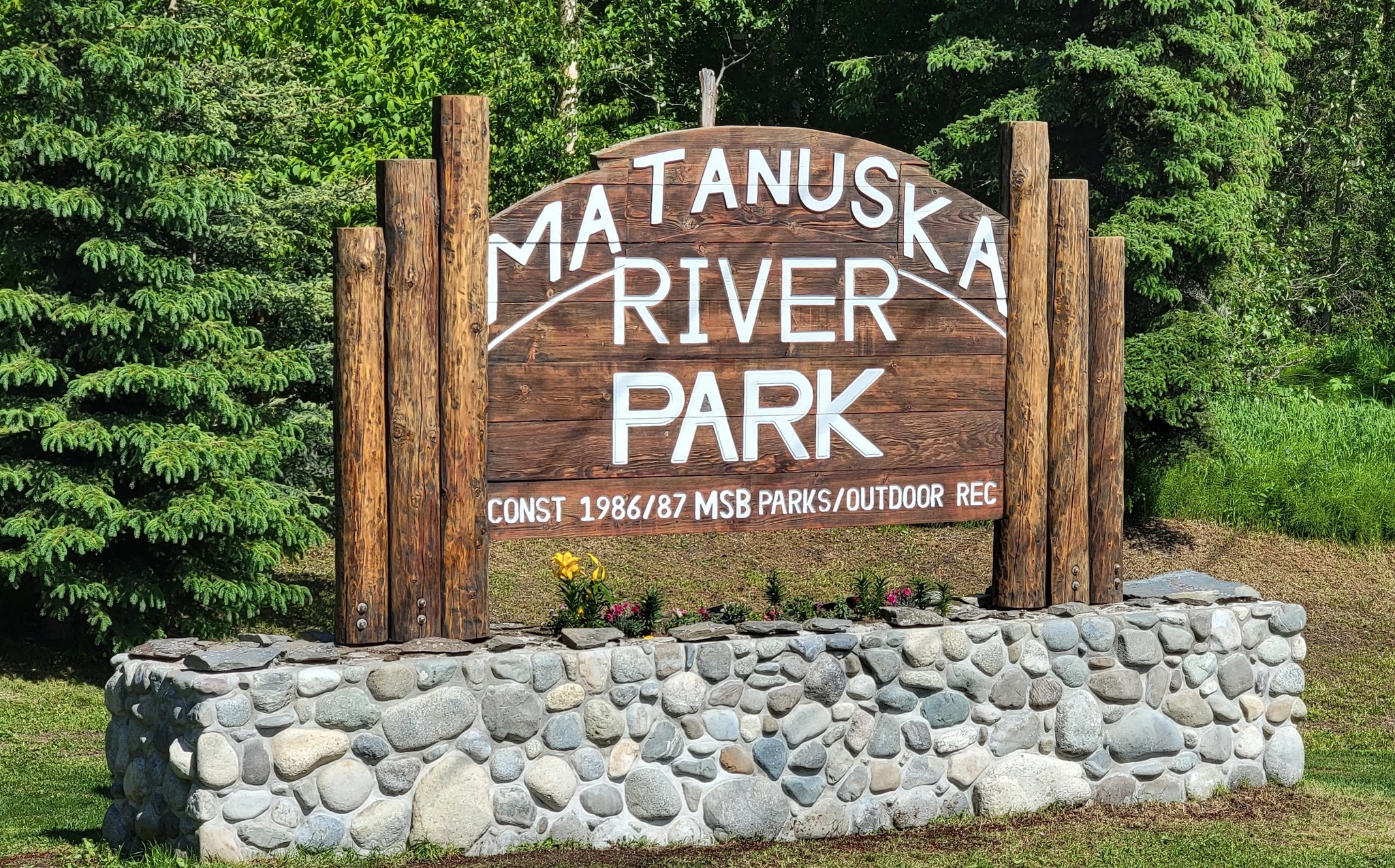
Matanuska River Park & Campground is a crown jewel of the Matanuska-Susitna Borough Parks and Recreation facilities. The park is a popular destination with 86 spaces for tents or RVs, a central comfort station, RV dump station, picnic tables, grills, four pavilions, playground equipment, a sand volleyball court, trails, a pump park for biking, river access, an observation deck, parking areas, a campfire area, and a group camping area.
Upgrades are planned to modernize the infrastructure, ensure reliable utility services, and improve the user experience.
In mid-October, in collaboration with the City of Palmer, the Borough will remove 30-35 Cottonwood trees near the park entrance. These trees currently extend 9-12 feet into the aviation glide path for planes landing at the Palmer Airport, creating a safety hazard for aviators and park visitors. The Borough will ensure the park continues to look great during and after this process.
This tree removal is part of broader improvements, including enhanced RV spots and facilities. For more details and pictures showing the park and planned tree cutting areas, see below.
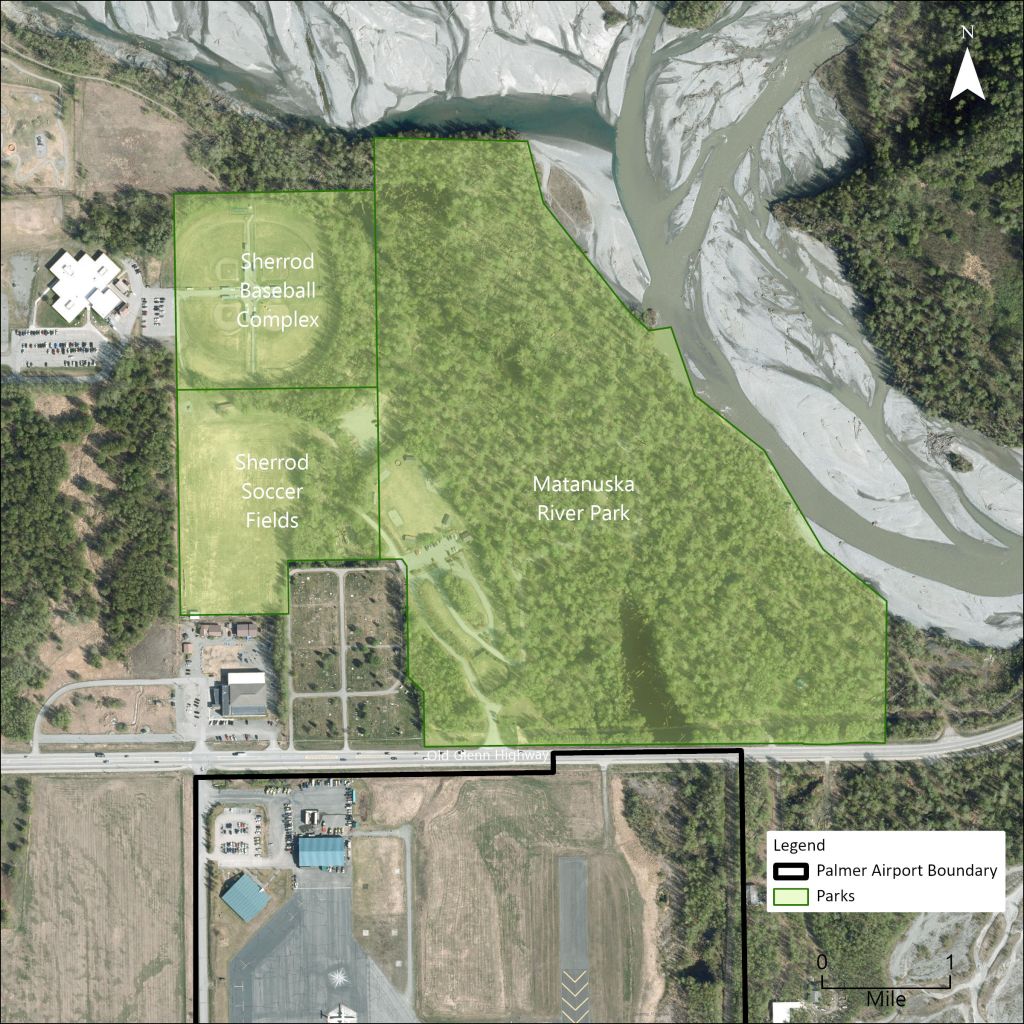
The Mat River Park was a concept derived between the City of Palmer and the Mat-Su Borough around 1984 to replace Deneke Camper Park (located in the heart of downtown Palmer) on the former Valley Hospital land. Deneke Camper Park was lost to new development and expansion of the Valley Hospital and the need for government and institutional uses for the Palmer Superior Courthouse. The City of Palmer, through its Planning and Zoning Commission, and the Mat-Su Borough Planning Commission and Assembly held public hearings and discussions on the replacement of the Deneke Camper Park. The properties that are currently Mat River Park were identified as the new location for a camper park as a result of the hearings and planning efforts.
The current avigation easement and right-of-way granted by the Mat-Su Borough to the City of Palmer states that it is “for the free and unobstructed passage of aircraft in and through the airspace above the approach surfaces and transitional surfaces of the Palmer Municipal Airport”. The approach and transitional surfaces involve the glidepath required for safe departure and takeoff.
The Mat-Su Borough secured Land and Water Conservation Act funding through the Alaska Department of Natural Resources, Parks and Recreation on December 4, 1987, to develop the following within the Mat River Park:
- 3 park pavilions
- Gravel pathways
- 12 picnic tables
- Landscaping
- 1 handicap parking space
In the early 2000s the City of Palmer and the Mat-Su Borough worked together to remove obstructions (trees) from the Mat River Park.
In 2015, an aeronautical survey was completed to identify obstructions in the runway protection zones for Palmer Airport’s main and crosswind runways. This survey was conducted in support of updating the airport master plan.
The City of Palmer and the Federal Aviation Administration update the Palmer Airport Master Plan document.
In 2021, a follow-up aeronautical survey was conducted to identify changes in the data collected during the 2015 survey, ensuring up-to-date information on obstructions within the runway protection zones.
Following the 2021 aeronautical survey, the City of Palmer completed a comprehensive airspace analysis and identified that some of the trees in the Mat River Park were tall enough to obstruct the approach and departure surfaces of landing aircraft. The FAA requested that the obstructions be removed as soon as possible. The City of Palmer hosted a meeting with key stakeholders to discuss removal of select trees and the need to expand the avigation easement to its full width (the easement currently covers half of the runway protection zone):
- Near-term need for clearing obstructions in the Mat River Park
- Long-term need for full width avigation easement in Mat River Park
In late 2021, the City of Palmer initiated work on an Environmental Assessment to assess impacts associated with acquisition of a full avigation easement to better maintain safe airspace over the Mat River Park. Following stakeholder scoping the FAA paused completion of the Environmental Assessment to focus efforts on the highest priority issue, which was and still is to remove existing obstructions located inside the existing avigation easement area.
Between 2022 and 2024 the City of Palmer and the Mat-Su Borough experienced staff changes. In October 2023, John Diumenti became the new Airport Manager for the City of Palmer. In 2024, Jillian Morrissey joined the Matanuska-Susitna Borough as the Community Development Director.
In the Summer of 2024, the FAA requires the City of Palmer to remove airspace obstructions for the main and crosswind runways or lose FAA funding. The City of Palmer Airport Manager reaches out to the Mat-Su Borough’s Community Development Director to collaborate on how to responsibly remove obstructions within the existing aviation easement inside the Mat River Park boundary without harming the characteristics of the Park and in a way that gives back to the community.
The City of Palmer and the Mat-Su Borough collaborate to establish a phased approach to obstruction removal within the Mat River Park that compliments that Mat-Su Borough’s plans to improve park and enhance user experience.
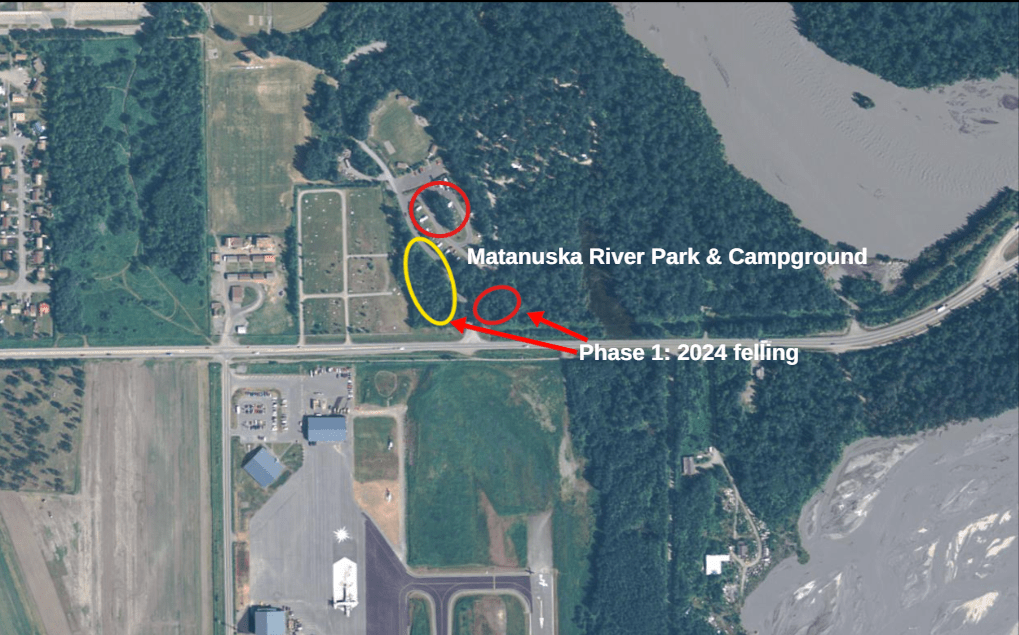
Following seasonal closure of the Mat River Park, the Mat-Su Borough and the City of Palmer will remove trees that are penetrating the airspace the most. These trees are located in the areas depicted as Phase 1. The City of Palmer will purchase park grade trees that are slower growing and mature at lower heights than the cottonwoods they will replace. The City of Palmer and the Mat-Su Borough will continue to work together to enhance the Mat River Park and maintain safe airspace.
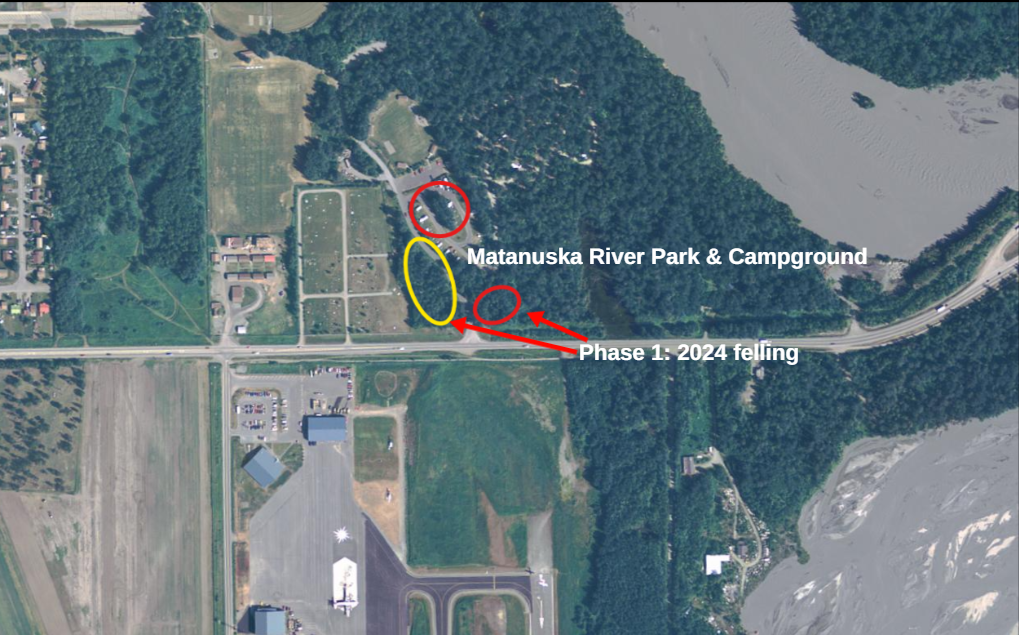
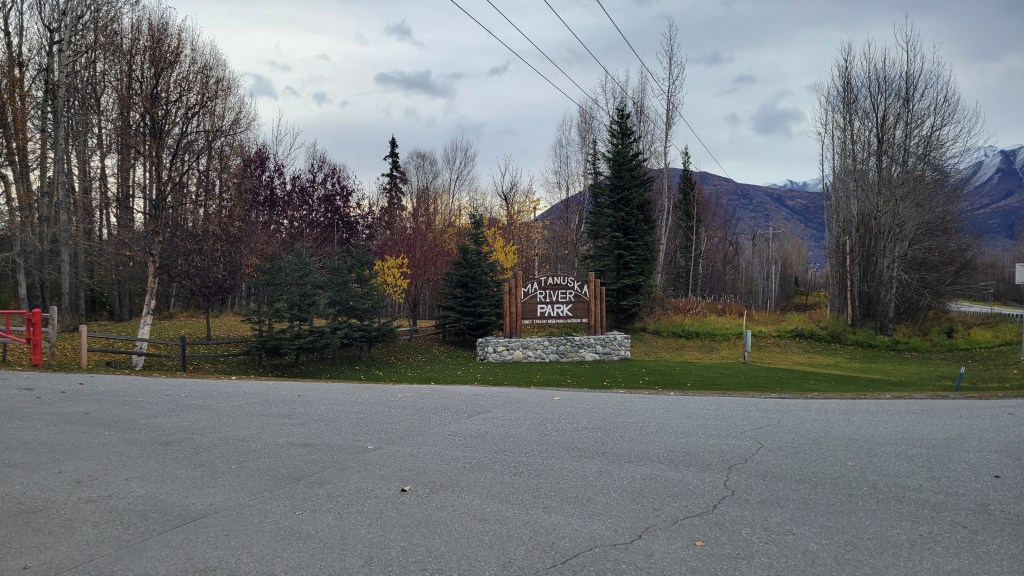
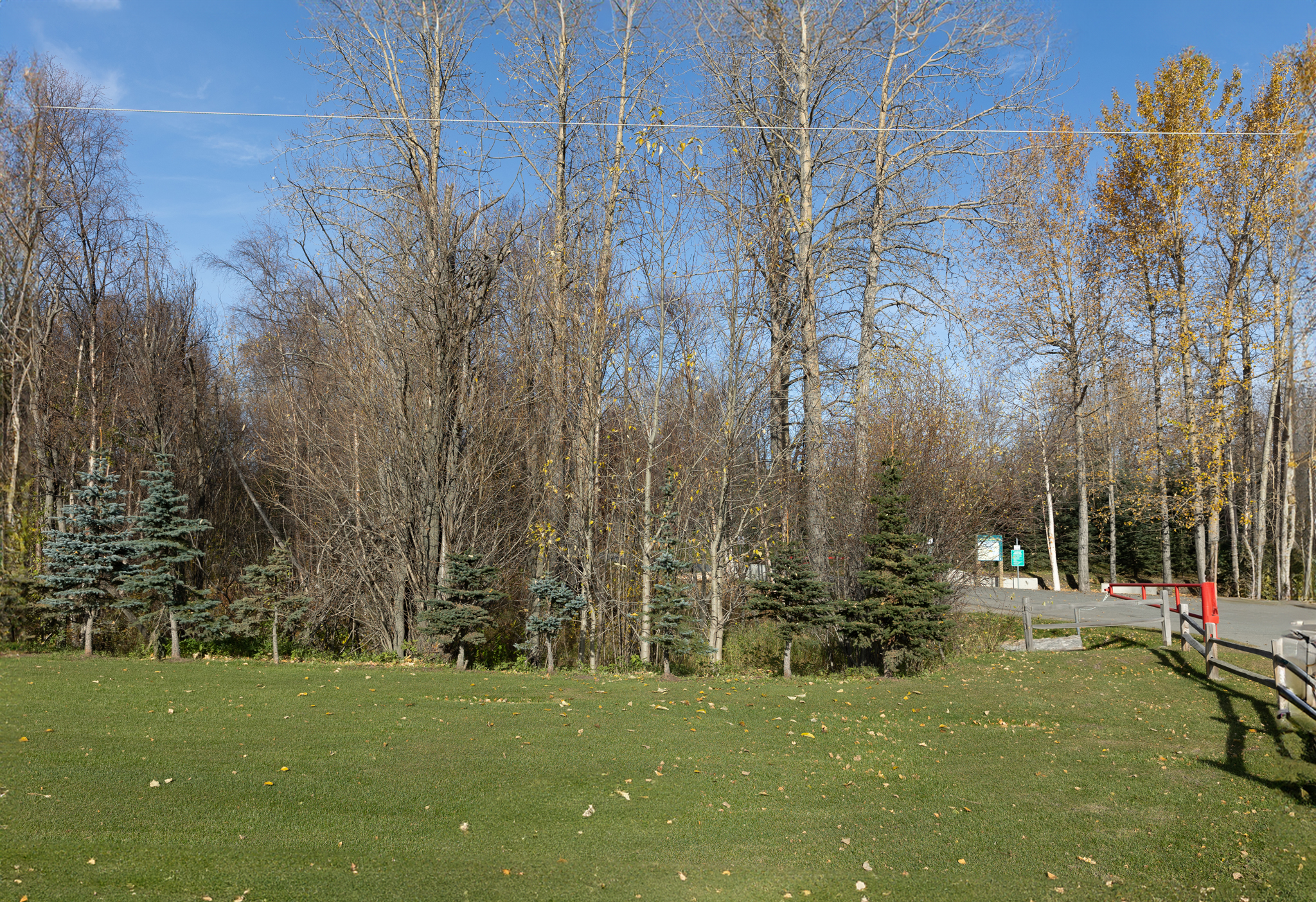
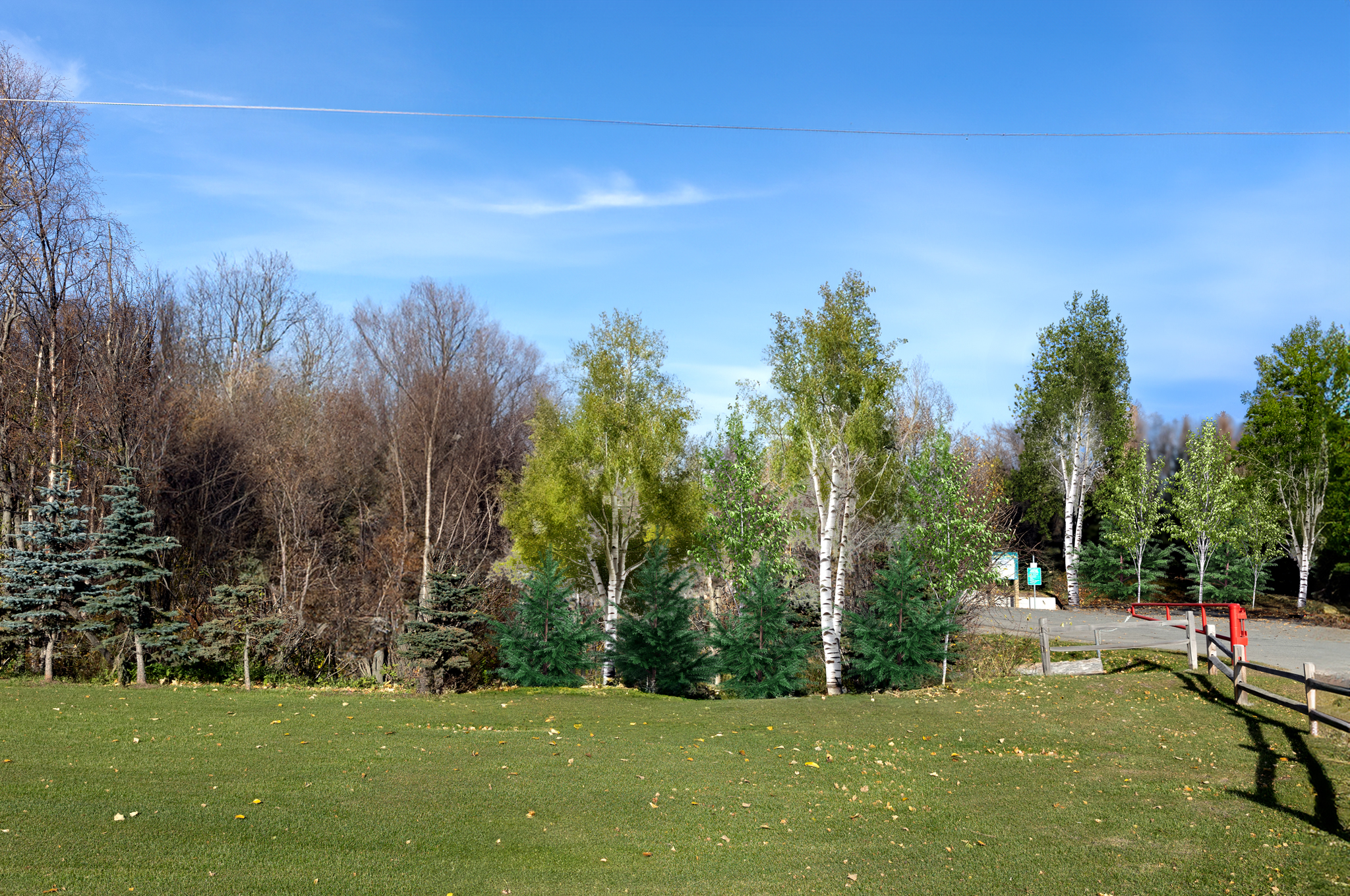
The City of Palmer and the Mat-Su Borough are beginning park upgrades this fall that will serve to enhance the Mat River Park and address safety issues for aircraft landing and takeoff due to tall cottonwood trees obstructing glidepaths. In October the City of Palmer, in collaboration with the Mat-Su Borough, will begin removing trees that have grown tall enough to penetrate the safe airspace used by pilots. Changes will take place in Phase I areas identified in the timeline above. Changes to the park entrance will be most noticeable to the public. However, the plan is to replace the cottonwood with birch and spruce which mature at a slower rate and lower height than cottonwoods. The images below show the existing park entrance and the entrance following tree replacement.
Why are trees being removed from Mat River Park & Campground?
The Borough and the City of Palmer are collaborating to provide a safer glide path for the airport for aviators and improved overhead safety for users of the Mat River Park Campground.
In 2016 and again in 2021, an aeronautical survey was completed for the City of Palmer Airport. These aeronautical surveys included an airspace analysis of the terrain, vegetation, and manmade structures that surround the airport to determine whether there were any safety issues to air traffic. After the completion of the aeronautical surveys, an Obstacle Action Plan was developed for all objects deemed to pose a hazard to air traffic at the Palmer Airport. Over the course of the past five years, the City of Palmer has undertaken an effort to remove trees at each runway end. The last remaining obstacles are in Mat River Park & Campground. The removal of these obstacles is in alignment with other planned upgrades for the property including improving and adding RV back-in spots, upgrading utilities and facilities for residents and visitors.
 Future Matanuska River Park Upgrades